How to Choose a Turnkey Flour Mill Plant Manufacturer for Your Project
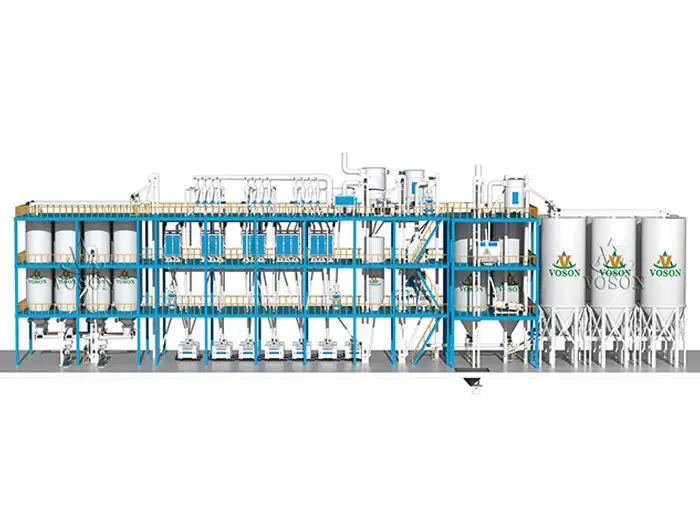
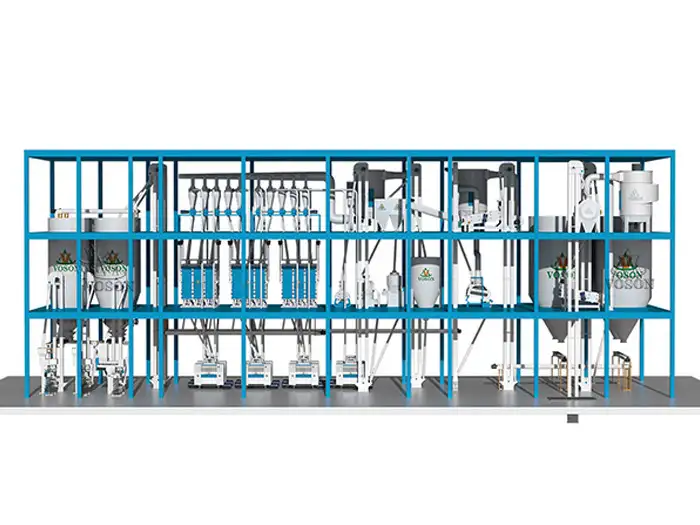
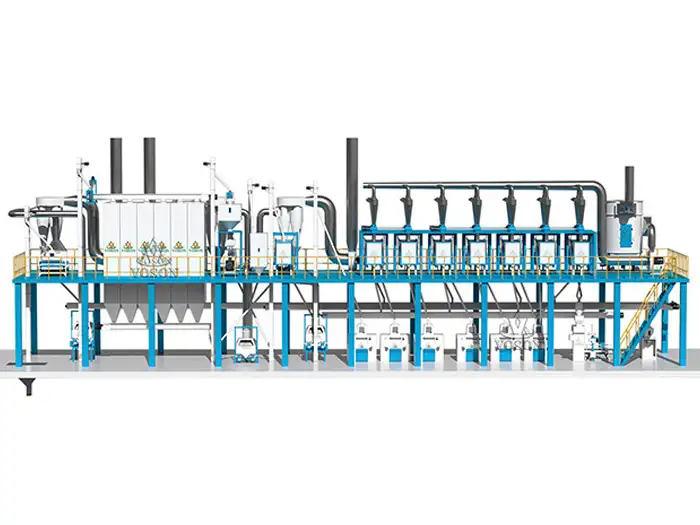
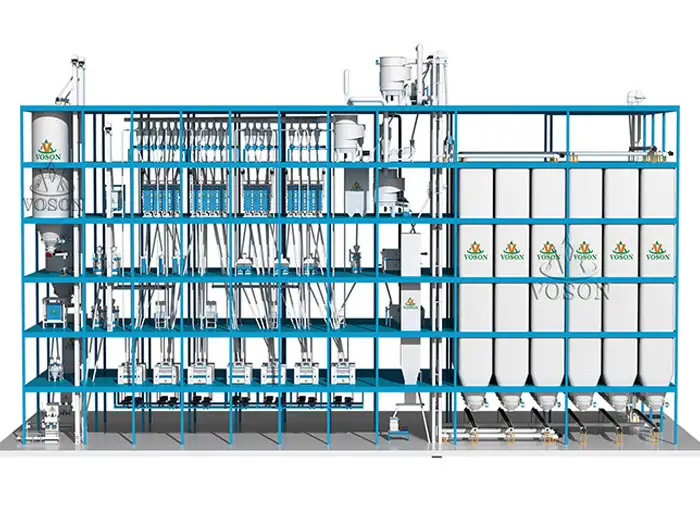
Choosing a turnkey flour mill plant manufacturer is a project decision, not just an equipment purchase. For an industrial maize or wheat milling plant, the real value of a supplier is not only the machines they offer, but whether they can help you build a complete, stable and profitable production system.
A complete flour milling project involves process design, equipment selection, plant layout, power supply, steel structure, dust collection, installation, commissioning, operator training and long-term spare parts support. If one part is missing, the final plant may face production instability, low flour yield, installation delay or higher hidden costs.
Before choosing a manufacturer, buyers should evaluate the supplier from an engineering point of view.
Start With Project Ability, Not Machine Price
Many buyers compare flour mill suppliers by machine price first. This is understandable, but it can be risky for complete plant projects.
A flour mill plant is made of several connected sections:
| Section | Main Function |
|---|---|
| Cleaning section | Remove impurities, stones, dust and light materials |
| Conditioning or degermination | Prepare wheat or maize before milling |
| Milling section | Grind grain into flour, meal or grits |
| Sifting section | Separate flour, bran and intermediate products |
| Packing section | Weigh and pack finished flour |
| Electrical control | Control motors, production flow and safety |
| Dust collection | Improve workshop environment and reduce flour loss |
A professional turnkey manufacturer should explain how these sections work together. If the supplier only talks about single machines, but cannot explain the process flow, capacity balance or plant layout, it may not be suitable for an industrial project.
Check Whether the Manufacturer Can Design the Full Process
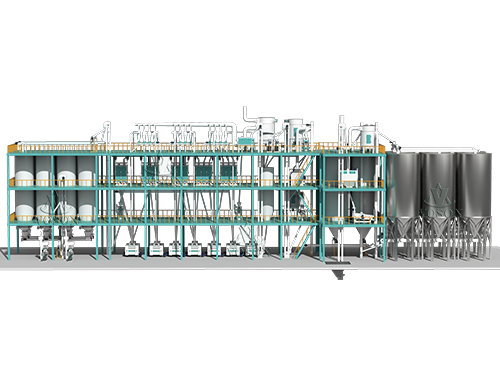
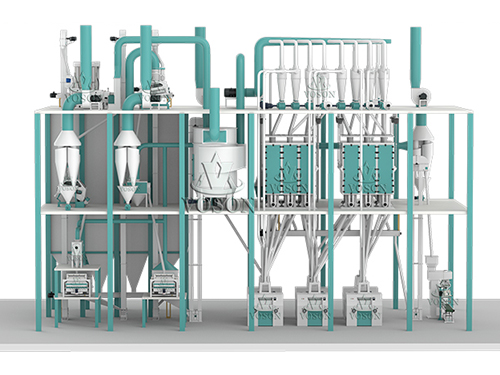
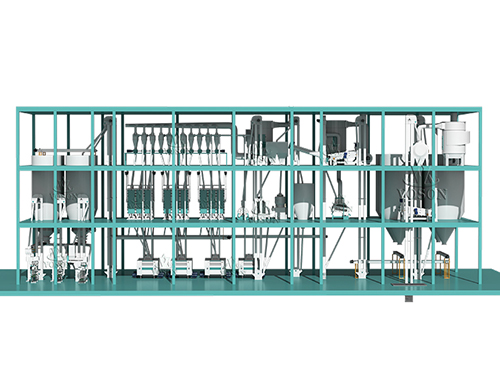
For large flour milling projects, process design decides the performance of the whole plant. The same 100T, 200T or 500T project can have different configurations depending on raw grain quality, final product demand, building size and automation level.
Before ordering, ask the manufacturer to provide:
- Process flow chart
- Equipment configuration list
- Plant layout suggestion
- Power requirement
- Dust collection design
- Foundation or installation guidance
- Raw grain and finished product flow explanation
A serious manufacturer should not only give a price. They should help you understand how the plant will run after installation.
Compare Complete Quotations, Not Only Total Price
A low quotation may not be a real low-cost solution. Some quotations look cheaper because important parts are not included, such as electric control cabinets, pipes, platforms, spare parts, installation materials or commissioning service.
When comparing quotations, check whether the offer includes:
| Item | Why It Matters |
|---|---|
| Main machines | Core production capacity |
| Cleaning equipment | Raw grain quality and machine protection |
| Milling equipment | Flour yield and production stability |
| Sifting equipment | Flour quality and product grading |
| Packing system | Finished product efficiency |
| Control system | Automation and operation safety |
| Spare parts | First-year maintenance support |
| Installation guidance | Reduces project delay |
| Commissioning | Helps the plant reach normal production |
A complete quotation should make the project boundary clear. If the quotation is unclear, the buyer may face extra costs later.
Ask for Similar Project Experience
Industrial flour mill plants require practical experience. A manufacturer that has completed similar projects usually understands installation problems, operation problems and market requirements better.
You can ask:
- Have you supplied complete maize or wheat flour milling plants before?
- What capacities have you built?
- Do you have project photos or videos?
- Have you exported to Africa, the Middle East or other overseas markets?
- Can you provide a reference project with similar raw grain and capacity?
For overseas buyers, export experience is also important. Packing, container loading, installation drawings, English documents and remote support all affect the final project progress.
Make Sure the Plant Layout Fits Your Site
A flour milling plant should be designed according to the customer’s land, workshop and local conditions. Copying a standard layout without considering the site may cause problems during installation.
Before confirming the order, the buyer should prepare:
- Land size or workshop size
- Building height
- Local power supply
- Raw grain storage plan
- Finished flour packing and storage plan
- Future expansion plan
A good manufacturer can adjust the layout according to the site. For large projects, the layout should also consider truck access, raw material flow, finished product flow, maintenance space and dust control.
Check Automation and Electrical Control
For industrial flour milling plants, automation is not only about reducing labor. It also helps improve production stability, safety and management efficiency.
Depending on project scale, the control system may include:
- Motor control cabinet
- PLC control
- Centralized operation panel
- Automatic weighing and packing
- Alarm and protection system
- Production monitoring options
If the project is large, buyers should pay attention to the control system brand, cabinet design, wiring standard and operator training. A weak electrical system can cause downtime even when the mechanical equipment is good.
Confirm Installation, Commissioning and Training Support
Equipment delivery is not the end of a turnkey project. Installation and commissioning decide whether the plant can start production smoothly.
Before signing the contract, confirm:
- Who provides installation drawings
- Whether engineers can support on-site installation
- What tools and local preparation are needed
- How long installation may take
- Whether commissioning is included
- Whether operator training is provided
For a complete plant, training is important. Operators need to understand machine adjustment, daily maintenance, safety operation and basic troubleshooting.
Evaluate Spare Parts and Long-Term Service
A flour mill plant is a long-term investment. After the plant starts running, spare parts and technical support become very important.
A reliable manufacturer should be able to provide:
- Recommended spare parts list
- Wearing parts supply
- Operation manual
- Maintenance guidance
- Online troubleshooting support
- Process adjustment advice
For industrial plants, even small downtime can affect daily output. Buyers should choose a supplier that can support long-term operation, not only initial delivery.
Check Whether the Manufacturer Understands Both Maize and Wheat Milling
Some buyers only start with maize or wheat, but may expand to other grain processing later. A manufacturer with experience in both maize and wheat milling can provide more flexible project advice.
Maize milling and wheat milling are different:
| Item | Maize Milling | Wheat Milling |
|---|---|---|
| Key preparation | Cleaning, peeling or degermination | Cleaning and conditioning |
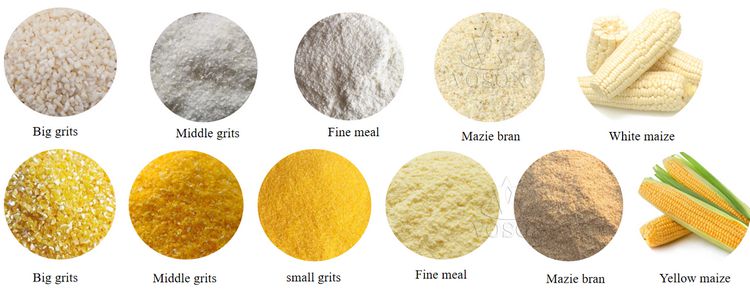
| Main products | Maize flour, maize meal, grits, bran | Wheat flour, bran |
| Process focus | Germ separation and product grading | Flour quality and extraction rate |
| Equipment design | Degerminator, roller mill, plansifter | Wheat washer, dampener, roller mill, plansifter |
If the supplier understands both processes, they can design better solutions for multi-grain or future expansion projects.
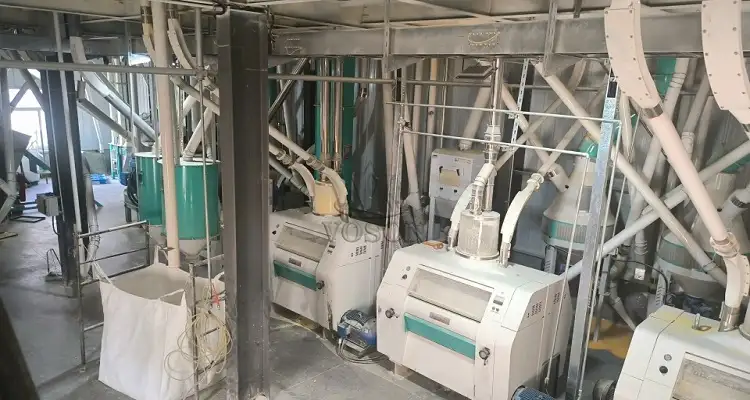
Choose a Manufacturer That Thinks Like a Project Partner
A good turnkey flour mill plant manufacturer should help the buyer reduce project risk. They should not simply sell equipment and disappear after shipment.
For a serious project, the manufacturer should help answer these questions:
- What capacity is suitable for the market?
- What equipment configuration is necessary?
- What can be optional?
- What preparation should be done before shipment?
- What may increase installation cost?
- How can the plant be expanded later?
- How should spare parts be prepared?
If a supplier can answer these questions clearly, they are more likely to be a project partner instead of only a machine seller.
Conclusion
Choosing a turnkey flour mill plant manufacturer requires more than comparing prices. Buyers should evaluate the supplier’s engineering design ability, complete equipment configuration, project experience, installation support, automation system and after-sales service.
For industrial maize and wheat flour milling projects, the best manufacturer is the one that can provide a complete and workable solution from raw grain cleaning to final flour packing.
Voson provides turnkey flour milling plant solutions for maize, wheat and multi-grain processing projects, including process design, equipment supply, layout support, installation guidance and technical service for overseas customers. Buyers can contact Voson to discuss project requirements before confirming a supplier.
FAQ
What is a turnkey flour mill plant?
A turnkey flour mill plant is a complete milling solution that includes process design, equipment supply, installation support, commissioning and technical service. It is designed as a full production line instead of separate machines.
What should be included in a flour mill plant quotation?
A complete quotation should include the main equipment list, cleaning system, milling system, sifting system, packing system, electrical control system, spare parts, technical documents and service scope.
How do I compare flour mill plant manufacturers?
Compare their project experience, process design ability, equipment configuration, quotation details, installation support, automation system, spare parts supply and after-sales service.
Is a turnkey solution better than buying machines separately?
For industrial projects, a turnkey solution is usually better because the equipment, process flow, layout and control system are designed together. This reduces matching problems and installation risks.
Can one supplier provide both maize and wheat flour milling solutions?
Yes, but buyers should confirm whether the supplier has real experience in both maize and wheat milling processes. The two processes require different cleaning, preparation and milling configurations.