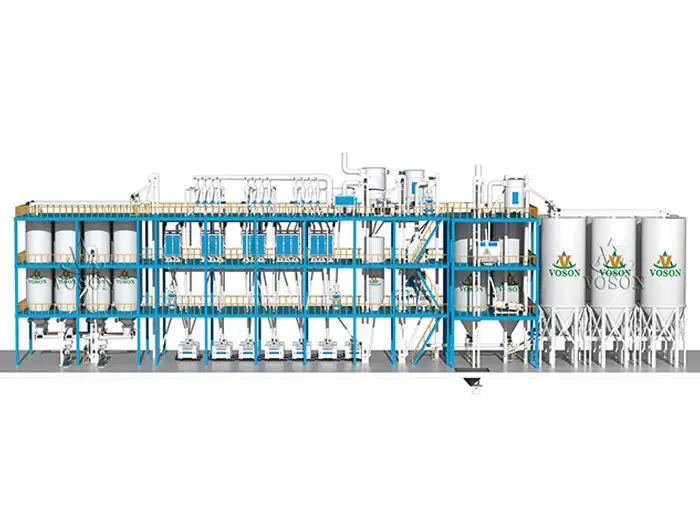
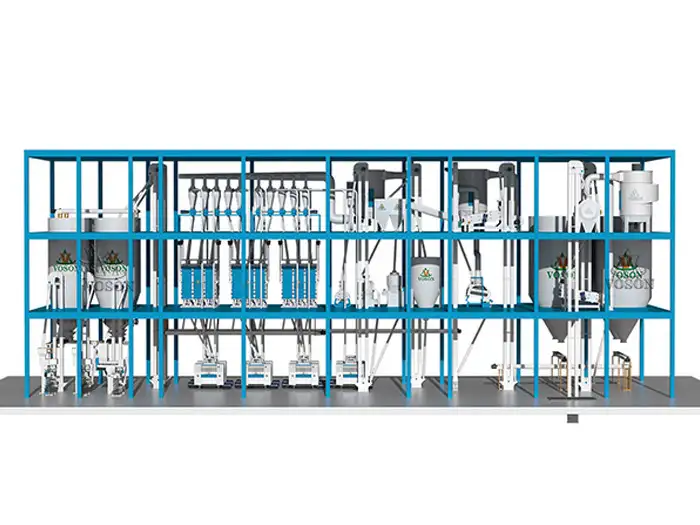
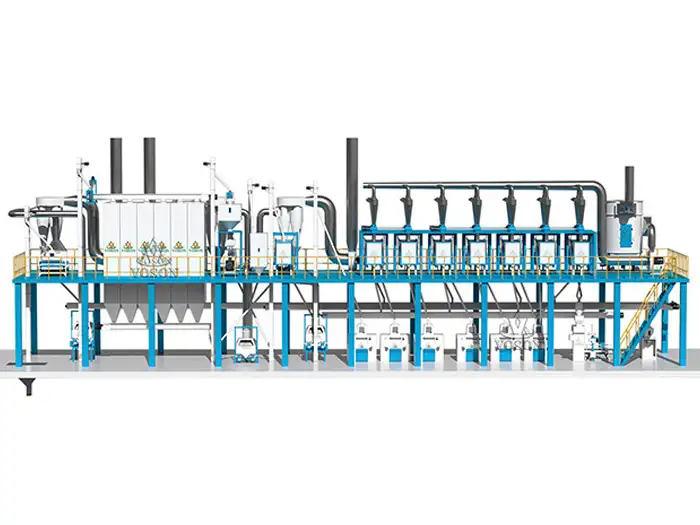
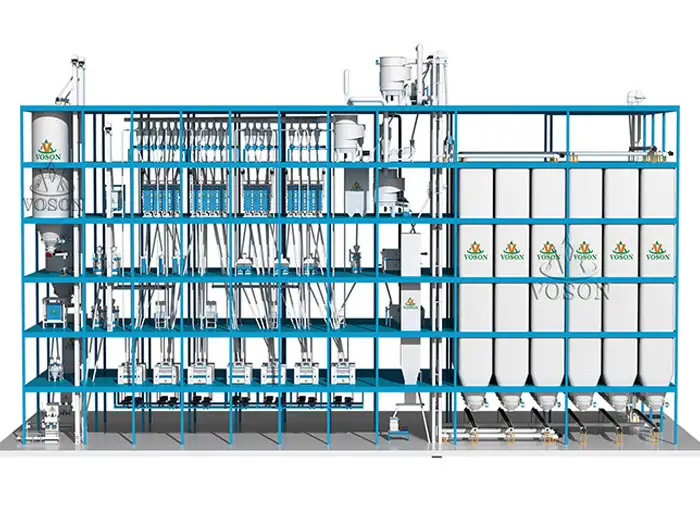
Complete Flour Milling Plant Equipment List
A complete flour milling plant equipment list should help buyers understand the whole production system, not only the main machines. For a maize or wheat flour mill project, the equipment list shows whether the supplier has considered cleaning, preparation, milling, sifting, packing, electrical control, dust collection and installation support.
Many quotations look simple because they only show the visible machines. However, a flour mill plant also needs elevators, conveyors, pipes, platforms, air ducts, control cabinets, spare parts and small installation parts. If these items do not appear in the offer, the buyer may face extra cost during installation.
This guide explains what a complete flour milling plant equipment list should include and how buyers can use it to check whether a project quotation is complete.
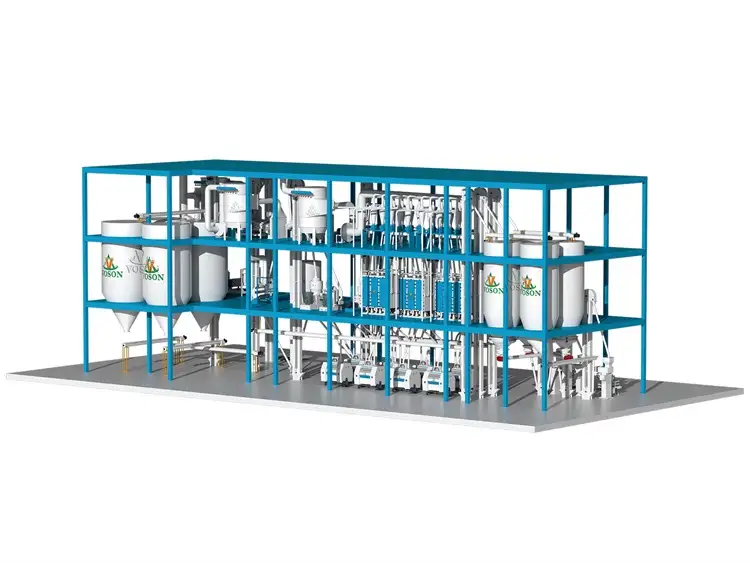
Do Not Read the Equipment List as a Machine Catalogue
A machine catalogue shows products. An equipment list for a complete plant should show how the production line works. This difference matters because a flour milling plant needs connected sections, not separate machines standing alone.
A good equipment list should follow the process flow. Buyers should see how raw grain enters the plant, how impurities leave the system, how grain moves into milling, and how finished products reach packing.
| Plant Section | Main Purpose |
|---|---|
| Cleaning | Remove impurities and protect the milling equipment. |
| Preparation | Prepare wheat or maize before milling. |
| Milling | Grind grain into flour, meal or grits. |
| Sifting and grading | Separate flour, bran, grits and intermediate products. |
| Conveying | Move material between machines and floors. |
| Packing | Weigh and pack finished products. |
| Control and dust collection | Support safe, stable and clean operation. |
If the list jumps directly to milling machines and ignores the surrounding sections, the quotation may not represent a complete plant.
Cleaning Equipment Comes Before Milling Equipment
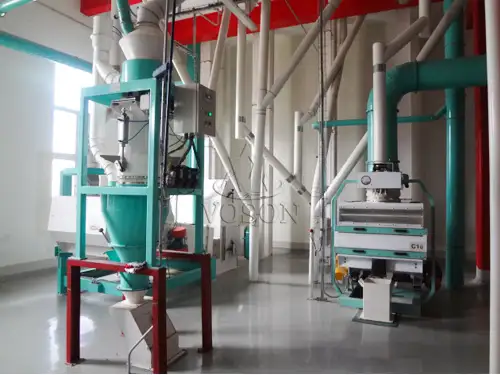
Cleaning equipment protects the whole plant. Stones, metal, dust and light impurities can damage machines, reduce flour quality and create more maintenance work.
The cleaning section should match raw grain quality. Wheat, maize and other grains may need different cleaning combinations.
- Vibrating cleaner or pre-cleaner for large and small impurities
- Destoner for stones and heavy impurities
- Magnetic separator for metal impurities
- Aspiration channel for dust and light materials
- Scourer or intensive cleaner for some wheat projects
- Elevators and conveyors for material transfer in the cleaning section
Buyers should ask why each cleaning machine appears in the list. A serious supplier should explain the role of each machine instead of simply adding models.

Preparation Equipment Depends on Raw Material
After cleaning, grain usually needs preparation before milling. This part changes according to raw material and final product.
Wheat projects often focus on dampening and conditioning. Maize projects may need peeling or degermination before flour or grits production.
| Raw Material | Preparation Equipment to Check |
|---|---|
| Wheat | Dampening system, water control, conditioning bins and feeding equipment. |
| Maize | Peeling machine, degerminator, moisture adjustment if required and grading support. |
| Corn grits | Degermination and particle size preparation before grading. |
| Multi-grain | Flexible cleaning and preparation equipment according to each grain. |
If the equipment list does not show how the grain enters the milling section in the right condition, the plant may struggle with quality or stability later.
Milling and Sifting Should Match Each Other
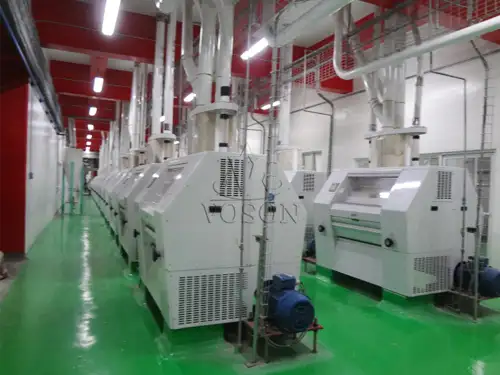
The milling section gets the most attention, but it cannot work alone. Sifting or grading equipment must match the milling capacity and the final product target.
In wheat milling, roller mills and plansifters work together. In maize milling, the line may use milling machines, grading equipment and product separation systems. The supplier should balance these sections carefully.
- Roller mills or maize milling machines
- Plansifter or grading sieve
- Bran finishing or by-product separation equipment if required
- Air locks, cyclones and material collection parts
- Flour blending or collection equipment if the process requires it
If milling capacity is higher than sifting capacity, the plant may create bottlenecks. Buyers should ask the supplier how each section matches the target output.
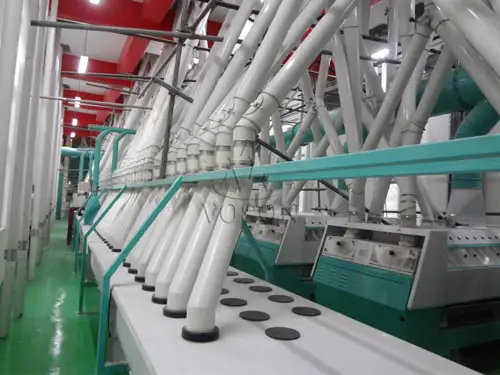
Conveying Equipment Connects the Whole Plant
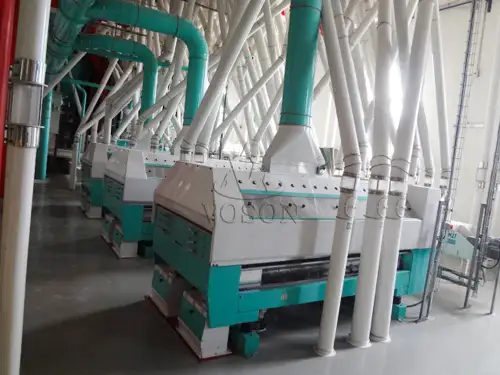
Conveying equipment often receives less attention than main machines, but it decides whether material can move smoothly through the line. Missing conveyors, elevators or pipes can stop installation from becoming a working plant.
A complete list should include transfer equipment between each section, not just the machines that process grain.
- Bucket elevators
- Screw conveyors or chain conveyors if required
- Pneumatic conveying parts if the process uses air transfer
- Pipes, elbows and connecting parts
- Cyclones and air locks
- Support frames and installation accessories
When buyers compare quotations, they should check whether conveying parts appear clearly. A low price may hide missing transfer equipment.
Packing Equipment Should Match the Sales Plan
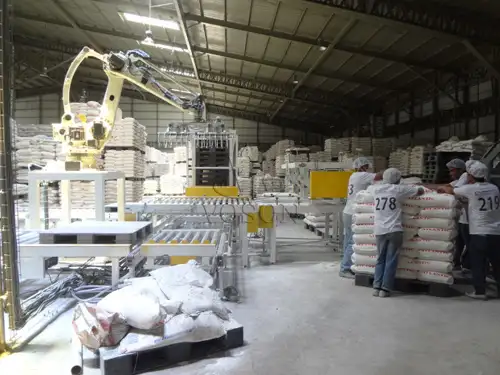
Finished product packing should follow the buyer's market plan. A plant that produces enough flour can still face trouble if packing speed or bag size does not match sales demand.
Before confirming packing equipment, buyers should decide how products will leave the factory.
- Large bags for distributors or wholesale customers
- Smaller bags for retail markets if required
- Separate packing for flour, meal, grits or bran
- Finished product storage and stacking area
- Manual feeding or automatic weighing requirements
A complete equipment list should show the packing system clearly. If the buyer plans multiple product grades, the packing plan should reflect that.
Electrical Control and Dust Collection Are Not Optional Details
Electrical control and dust collection affect daily operation. Buyers should not treat them as small accessories at the end of the list.
Control cabinets, motors, wiring scope and dust collection points should appear in the project discussion before production starts.
| System | What Buyers Should Check |
|---|---|
| Electrical control | Motors, control cabinets, voltage, wiring scope and electrical drawings. |
| PLC or central control | Whether the plant needs centralized operation, alarms or touch screen control. |
| Dust collection | Dust points, fans, ducts, collectors and workshop environment control. |
| Safety | Emergency stop, motor protection and operator safety arrangement. |
A supplier should explain these systems according to plant size and automation level. Large industrial projects usually need more complete control planning.
Platforms, Frames and Small Parts Can Create Hidden Cost
Some equipment lists look complete but leave out platforms, ladders, support frames or small installation parts. These items may not look important in the quotation, but installation depends on them.
Buyers should check whether the offer includes the supporting structure required for operation and maintenance.
- Steel platforms and access ladders
- Machine support frames
- Guardrails and maintenance access
- Bolts, brackets and small connecting parts
- Cable trays if included in the supplier's scope
- Pipe supports and fixing accessories
If the supplier excludes these items, the buyer should know who will prepare them locally and how much extra cost may appear.
Spare Parts Should Appear in the Equipment List
A flour milling plant needs maintenance after production starts. Spare parts and wearing parts should not wait until a problem happens.
For overseas buyers, spare parts delivery takes time. A first shipment spare parts package can reduce downtime during the early operation period.
- First shipment spare parts list
- Wearing parts for cleaning and milling sections
- Screens, belts, bearings or other common replacement parts
- Electrical spare parts if required
- Recommended one-year spare parts package
- Part numbers or labels for easier future communication
A supplier who includes spare parts planning usually pays more attention to long-term plant operation.
How Buyers Can Review an Equipment List
Buyers do not need to know every machine model, but they should understand whether the list covers the whole production route. A practical review can prevent many hidden problems.
- Does the list follow the process from cleaning to packing?
- Does it include both main machines and supporting equipment?
- Are conveying parts, pipes and platforms written clearly?
- Does the list show electrical control and dust collection?
- Are spare parts included?
- Can the supplier explain why each major machine is needed?
- Are optional and excluded items marked clearly?
If the answer is unclear, ask the supplier to revise the equipment list before confirming the quotation.
Conclusion
A complete flour milling plant equipment list should show the whole production system. It should include cleaning, preparation, milling, sifting, conveying, packing, electrical control, dust collection, platforms and spare parts.
For overseas buyers, the equipment list is also a risk-control document. It helps reveal whether the quotation covers a real turnkey plant or only a group of main machines.
Voson provides complete equipment solutions for maize, wheat and multi-grain flour milling projects. You can view our flour milling equipment, maize flour mill plant and wheat flour mill plant for project reference. You can also view our flour mill plant projects or contact Voson to review an equipment list for your project.
FAQ
What equipment is needed for a flour milling plant?
A complete plant needs cleaning, preparation, milling, sifting, conveying, packing, electrical control, dust collection, platforms and spare parts.
Why are conveyors and pipes important?
They connect the machines into a working production line. Without them, main machines cannot run as a complete plant.
Should packing equipment appear in the quotation?
Yes. Packing equipment should match the final product, bag size and sales channel.
How can buyers find missing equipment?
They should check the list section by section, from raw grain cleaning to final packing, and ask the supplier to mark included, optional and excluded items.