Flour Mill Plant Quotation: What Should Be Included in a Complete Offer?
A flour mill plant quotation should not be read like a simple price list. For a complete maize or wheat milling project, the quotation is actually a project document. It tells the buyer what equipment will be supplied, what service is included, what must be prepared locally, and where extra cost may appear later.
Many buyers ask several suppliers for quotations and compare the total price first. This is understandable, but it can be dangerous. One offer may include cleaning machines, elevators, pipes, platforms, electrical control, spare parts and installation drawings. Another offer may only include the main milling machines. These two prices are not the same kind of quotation.
Before choosing a supplier, overseas buyers should read the quotation carefully and make sure the complete plant scope is clear. A good quotation reduces misunderstanding before production, shipment and installation.

Start With the Project Basis
A serious quotation should first explain the basic project assumptions. If the basis is unclear, the price may not match the real production target.
For example, a quotation for wheat flour, maize flour and corn grits should not use the same process. A 100T plant and a 300T plant also need different layout, power and packing plans. The quotation should show what the supplier is designing for.
- Raw material: wheat, maize, corn or other grains
- Final product: flour, meal, grits, bran or multiple grades
- Target capacity per day or per hour
- Packing size and finished product handling
- Power condition and local voltage
- Workshop size if already available
- Destination country or delivery port
If the supplier gives a quotation without confirming these points, the offer may be based on a standard model rather than your actual project.
A Complete Offer Should Explain the Process Flow
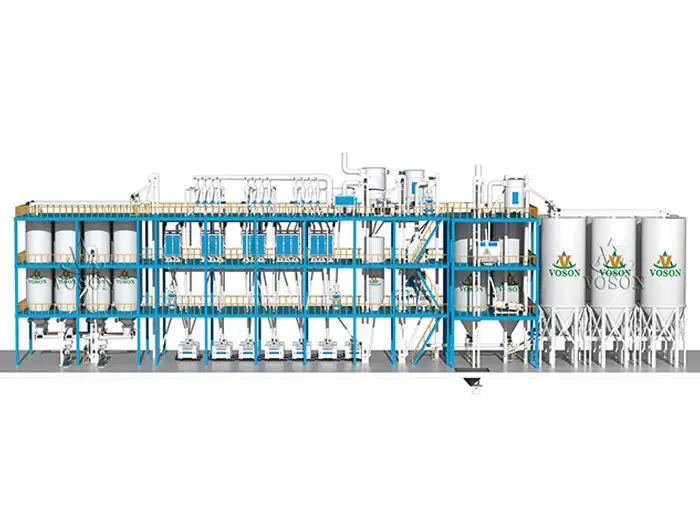
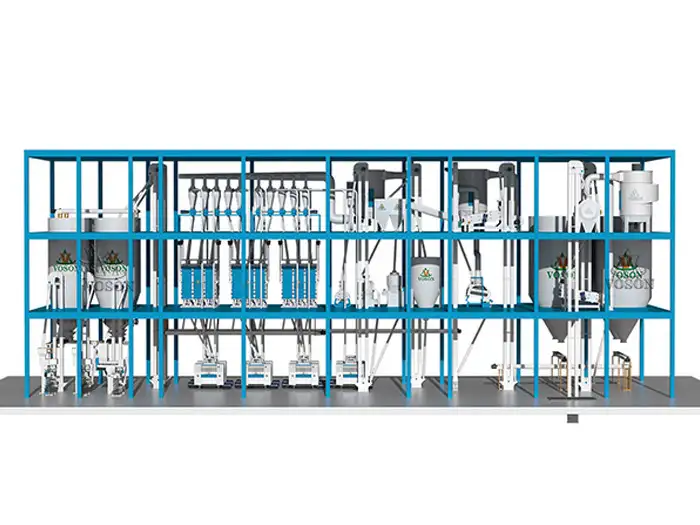
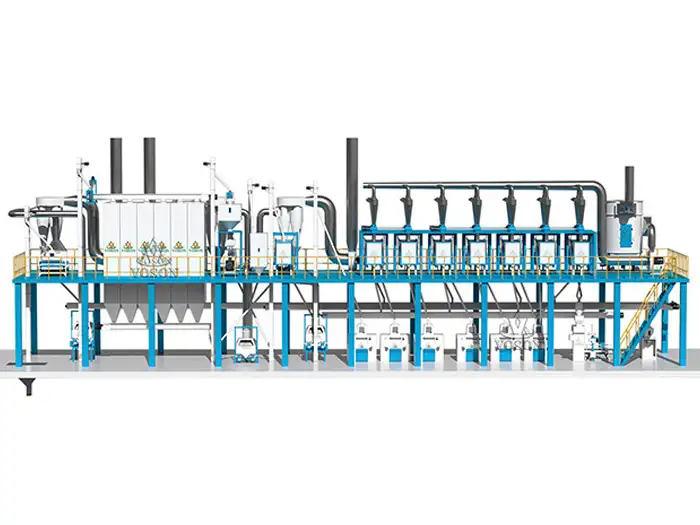
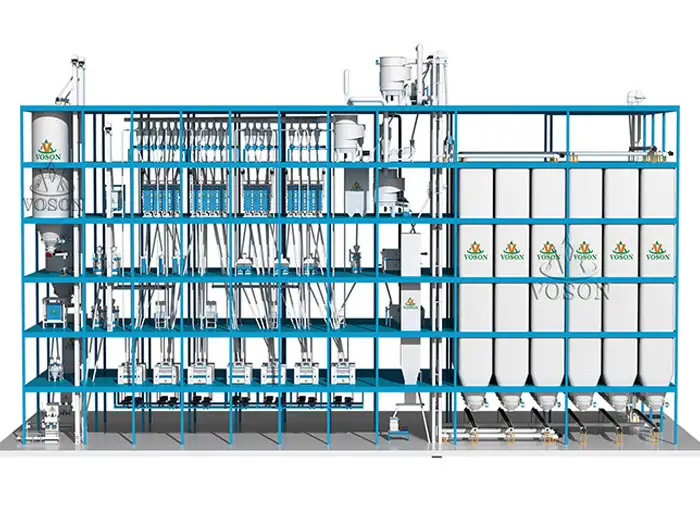
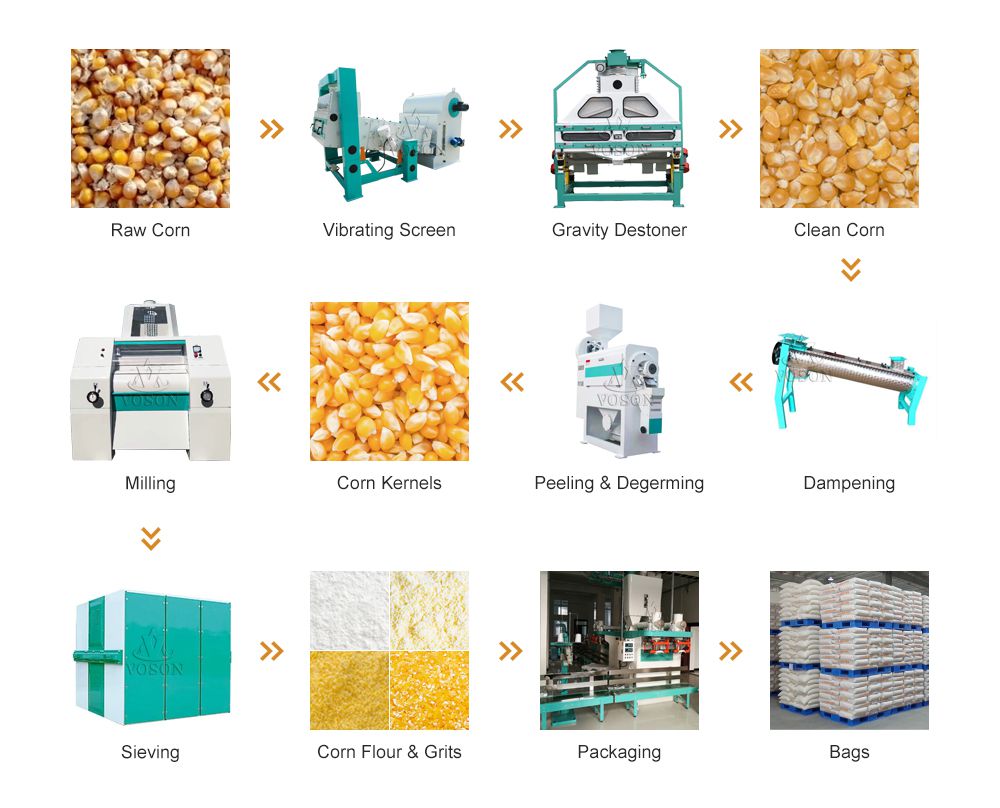
A machine list can show what equipment is included, but it cannot fully explain how the plant will run. For a complete flour milling plant, the quotation should include or refer to a process flow chart.
The process flow helps buyers understand how raw grain enters the plant, how impurities are removed, how milling and sifting are arranged, and how finished flour is packed.
| Process Section | What the Quotation Should Make Clear |
|---|---|
| Cleaning | How stones, dust, metal and light impurities are removed. |
| Conditioning or degermination | How wheat or maize is prepared before milling. |
| Milling | How grain is ground according to the final product requirement. |
| Sifting and grading | How flour, bran, grits or intermediate products are separated. |
| Packing | How finished products are weighed, packed and moved. |
| Dust collection | Where dust points are controlled and how the workshop is protected. |
If the process is not explained, buyers may not know whether the quotation is complete or just a machine package.
Check the Equipment Scope Line by Line
The largest difference between quotations is often not the main machines, but the supporting equipment. A lower price may simply mean that many necessary parts are not included.
When reviewing a flour mill plant quotation, check whether the supplier has listed both main equipment and supporting parts.
- Raw grain cleaning equipment
- Wheat conditioning or maize degermination equipment
- Milling and sifting equipment
- Elevators, conveyors and material transfer equipment
- Pipes, air ducts, elbows and connecting parts
- Platforms, ladders, frames and supporting structure
- Packing and weighing equipment
- Dust collection system
- Electrical control cabinets and motors
- Spare parts and wearing parts
If these items are not clearly listed, ask the supplier to mark them as included, optional or excluded. This single step can prevent many later disputes.
Electrical Control Scope Must Be Clear
Electrical control is one of the easiest areas to misunderstand, especially for overseas projects. Some suppliers include motors and control cabinets. Some include PLC control. Some expect the buyer to prepare cables locally. These details should be written clearly.
| Electrical Item | Question to Ask |
|---|---|
| Motors | Are all motors included? What voltage and frequency are used? |
| Control cabinet | Is it included? Is it centralized or section-based? |
| PLC control | Is PLC included, optional or not included? |
| Cables | Are cables included, or should the buyer prepare them locally? |
| Drawings | Will electrical drawings and wiring diagrams be provided? |
| Safety | Are overload protection, alarms or emergency stops included? |
A flour milling plant may have many motors and connected sections. If electrical scope is unclear before shipment, installation can become slow and expensive.
Installation Support Should Not Be Hidden in One Sentence
Some quotations simply say installation guidance is included, but this is not enough. Buyers should ask what kind of guidance will actually be provided.
For a turnkey project, installation support should be practical. The buyer needs to know what the supplier will provide and what the local team must prepare.
- Plant layout drawing
- Installation drawing
- Foundation or floor requirement guidance
- Equipment positioning guidance
- Online or on-site engineer support
- Commissioning support
- Operator training
- Buyer responsibility for local workers, tools, lifting equipment and engineer travel cost
If installation service is optional, the quotation should show how it is charged. If it is included, the service scope should still be clear.

Spare Parts Are Part of the Real Offer
A complete quotation should not ignore spare parts. Once the plant starts running, wearing parts and small components become important for stable production.
For overseas buyers, spare parts planning is even more important because delivery takes time. It is better to prepare basic wearing parts with the first shipment than wait until the plant stops.
- First shipment spare parts list
- Recommended one-year wearing parts package
- Spare parts price list if available
- Delivery time for future spare parts
- Maintenance guide or replacement instructions
- Part labels or codes for easier communication
A supplier that takes spare parts seriously is usually thinking about long-term operation, not only the first order.
Commercial Terms Can Change the Real Cost
Even when the technical scope looks good, commercial terms can still affect the real project cost. Buyers should check payment, delivery, packing and warranty terms before confirming the order.
- Quotation validity period
- Payment schedule
- Production lead time
- Packing method and container estimate
- Trade term such as EXW, FOB, CFR or CIF
- Delivery port and shipment responsibility
- Warranty period and warranty conditions
- Documents for customs clearance
A clear commercial section helps both buyer and supplier avoid arguments later, especially when the project involves international shipment and local installation.
Common Missing Items in Low Quotations
A low quotation is not always bad. But if the price is much lower than others, buyers should check whether important items are missing.
| Missing Item | Possible Result |
|---|---|
| Elevators and conveyors | Machines arrive but cannot form a complete line. |
| Pipes and air ducts | Installation needs extra local fabrication. |
| Platforms and frames | Maintenance and operation become difficult. |
| Control cabinets or cables | Electrical work becomes unclear and costly. |
| Installation drawings | Local team has difficulty positioning equipment. |
| Spare parts | Downtime risk increases after production starts. |
The goal is not to reject every low price. The goal is to understand why the price is low and whether the missing items are acceptable.
A Practical Quotation Review Checklist
Before choosing a supplier, buyers can use a simple checklist to review each quotation. This makes comparison more professional and less emotional.
- Does the quotation match my raw material and final product?
- Is the process flow chart provided or explained?
- Is the complete equipment list clear?
- Are supporting parts included, optional or excluded?
- Is electrical control scope clear?
- Is installation support explained in detail?
- Are spare parts listed?
- Are packing, shipment and trade terms clear?
- Are warranty and after-sales service written clearly?
If a quotation cannot answer these questions, ask the supplier to revise it before making a decision.
Conclusion
A complete flour mill plant quotation should explain much more than equipment price. It should show the project basis, process flow, equipment scope, supporting parts, electrical control, installation support, spare parts, commercial terms and exclusions.
For overseas buyers, the safest quotation is not always the lowest one. It is the quotation that makes the full project clear and reduces hidden cost during installation and operation.
Voson provides turnkey flour milling plant solutions for maize, wheat and multi-grain processing projects. You can view our flour milling equipment, flour mill plant projects, maize flour mill plant and wheat flour mill plant for project reference. You can also contact Voson to discuss a complete flour mill plant quotation.
FAQ
What should be included in a flour mill plant quotation?
A complete quotation should include project basis, process flow, equipment list, electrical control scope, installation support, spare parts, commercial terms and excluded items.
Why do flour mill plant quotations have different prices?
Prices differ because suppliers may include different machines, supporting equipment, automation levels, installation service, spare parts and technical documents.
Should I choose the lowest quotation?
Not always. A low quotation may exclude important parts such as conveyors, pipes, platforms, control cabinets, installation drawings or spare parts.
What should overseas buyers check before paying a deposit?
They should check quotation scope, payment terms, production time, packing method, shipping terms, installation support, warranty and after-sales service.