How to Compare Flour Milling Plant Suppliers for Turnkey Projects
Choosing flour milling plant suppliers for a turnkey project is not the same as buying one machine. A complete maize or wheat flour mill plant has many connected parts: cleaning, conditioning or degermination, milling, sifting, packing, electrical control, dust collection, installation and long-term spare parts support.
Many buyers start by asking several suppliers for a price. This is normal, but it can also be misleading. One supplier may quote only the main machines, while another supplier includes elevators, pipes, platforms, control cabinets, installation drawings and commissioning support. If you only compare the final number, the "cheaper" supplier may become more expensive after shipment.
For a turnkey flour milling project, the supplier should be evaluated from an engineering point of view. The real question is not only who can sell machines, but who can help you build a stable production system.

Start With Project Ability, Not Machine Price
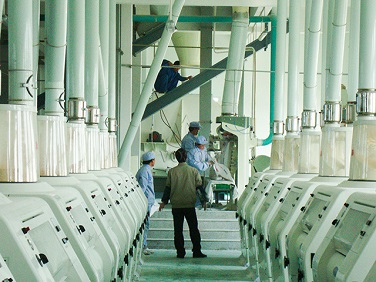
For turnkey projects, machine price is only one part of the decision. A flour mill plant must run as a connected production line. If the supplier cannot explain the whole system, the project risk is already high before the order is placed.
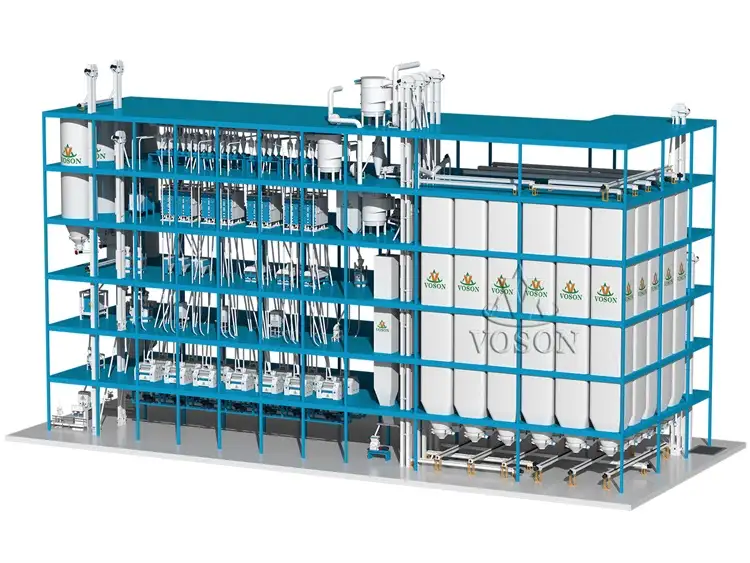
A professional supplier should be able to discuss the project from raw grain to final flour packing. They should understand how each section affects the next section.
| Project Section | What the Supplier Should Explain |
|---|---|
| Cleaning section | How impurities, stones, dust and metal are removed before milling. |
| Conditioning or degermination | How wheat or maize is prepared for stable milling and better product quality. |
| Milling section | How the grain is broken, ground and controlled according to the final product. |
| Sifting section | How flour, bran, grits or intermediate products are separated. |
| Packing section | How finished products are weighed, packed, stored and moved. |
| Control and dust collection | How the plant is operated safely and how dust is controlled. |
If a supplier only sends a machine list and cannot explain how these sections work together, it is better to slow down before comparing prices.
Check Whether the Supplier Understands Your Product
The same capacity can require different configurations depending on the final product. A supplier who understands turnkey projects will ask about your target market before fixing the equipment.
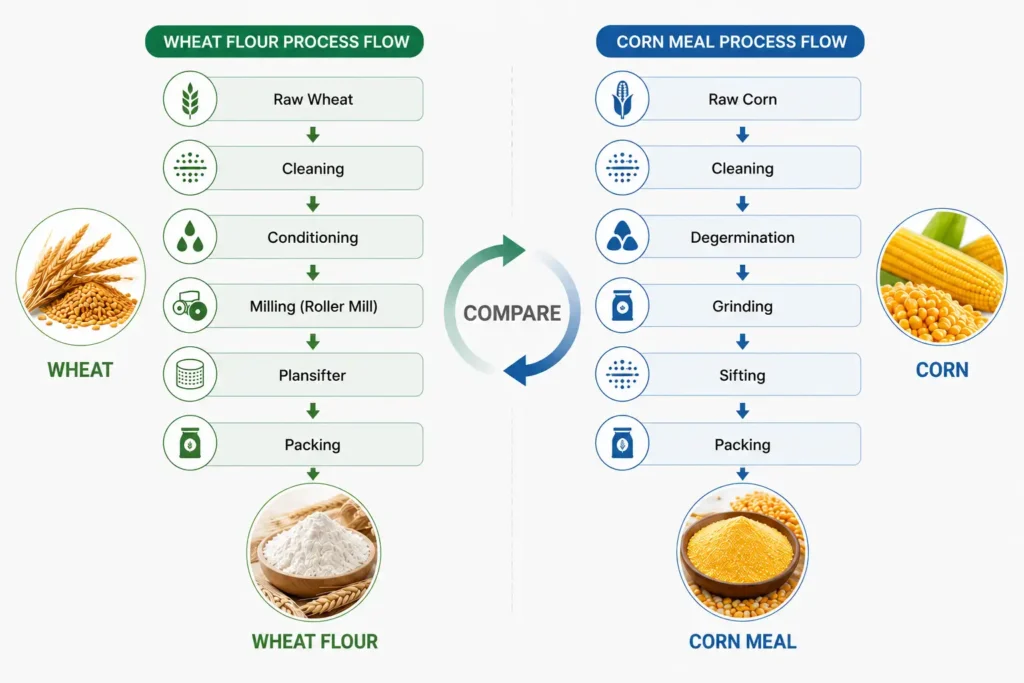
For example, a maize flour project, a maize grits project and a wheat flour project should not be designed in the same way. The cleaning, preparation, milling and sifting requirements are different.
- What raw grain will be processed: maize, wheat, corn or other grains?
- What finished products are required: flour, meal, grits, bran or multiple grades?
- What flour fineness or particle size does the local market prefer?
- What packing sizes are common in your market?
- Will the plant need future expansion?
A supplier who asks these questions is usually thinking about the project. A supplier who gives a fixed quotation without understanding the product may only be selling equipment.
Compare the Process Flow Before Comparing the Quotation
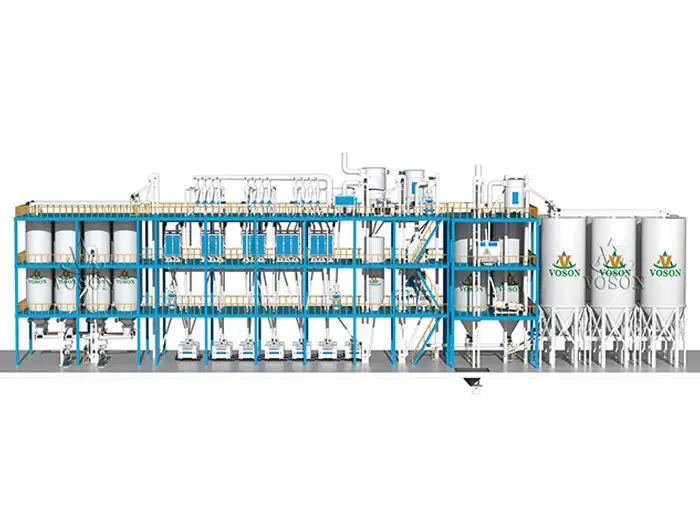
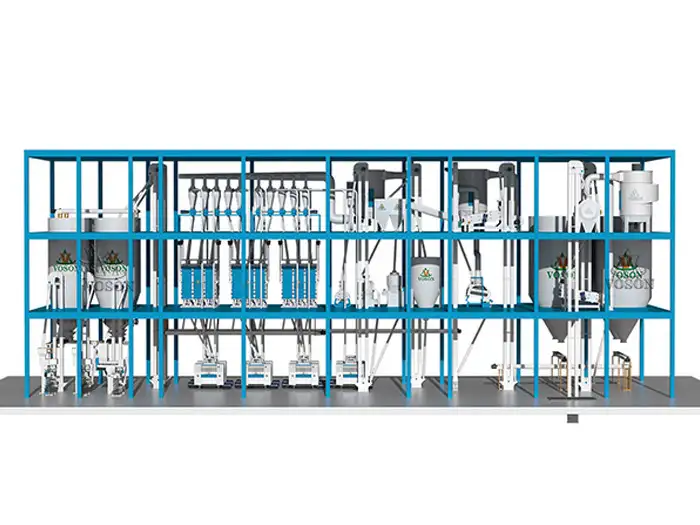
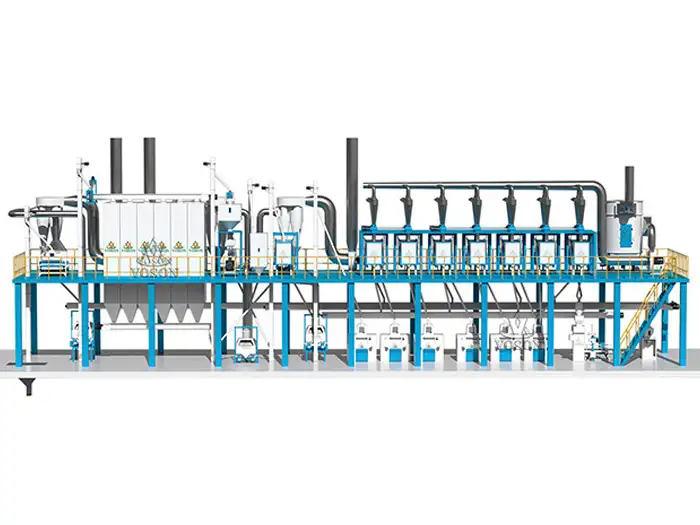
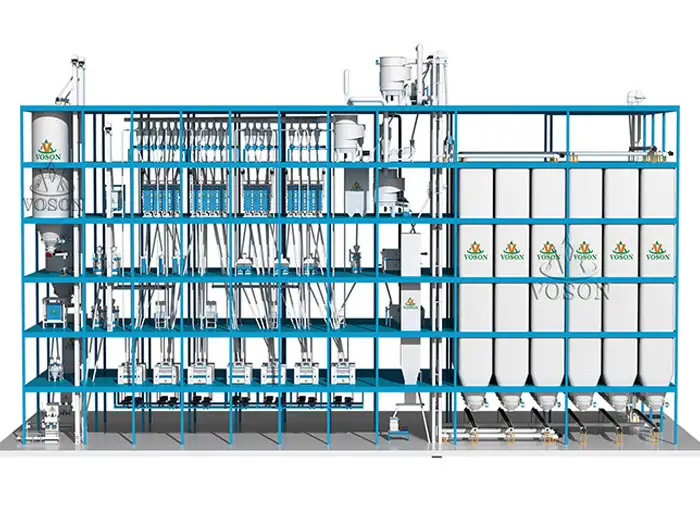
For a complete plant, the process flow chart is more useful than a price list. It shows whether the supplier has considered the production logic and whether important sections are missing.
Before comparing quotations, ask each supplier to provide a basic process flow and explain it. You do not need to become an engineer, but you should understand how raw grain moves through the plant and where finished products come out.
- How does raw grain enter the cleaning section?
- Where are stones, dust and light impurities removed?
- Is wheat conditioned or maize degerminated before milling?
- How are flour, bran, grits or by-products separated?
- How does finished flour move to packing?
- Where are dust collection points arranged?
If two suppliers quote similar capacity but the process routes are very different, do not judge by price first. Ask why the configuration is different.
Look Carefully at What Is Included
One of the biggest differences between flour milling plant suppliers is the quotation scope. Some offers look cheaper because they leave out supporting parts that are necessary for installation.
When comparing suppliers, check whether the quotation includes the items that turn machines into a complete production line.
- Main cleaning, milling, sifting and packing machines
- Elevators, conveyors and material transfer equipment
- Pipes, air ducts, elbows and connecting parts
- Platforms, ladders, frames and support structures
- Motors, control cabinets and electrical drawings
- Dust collection system
- First shipment spare parts and wearing parts
- Installation drawings, layout drawings and operation documents
If these items are not written clearly, ask the supplier to mark them as included, optional or excluded. A clear quotation is usually safer than a cheap but vague quotation.
Evaluate Layout and Installation Support
A turnkey supplier should not only know how to make equipment. They should know how the equipment will be installed in your factory. This is especially important for overseas buyers, because changing the layout after shipment can be expensive.
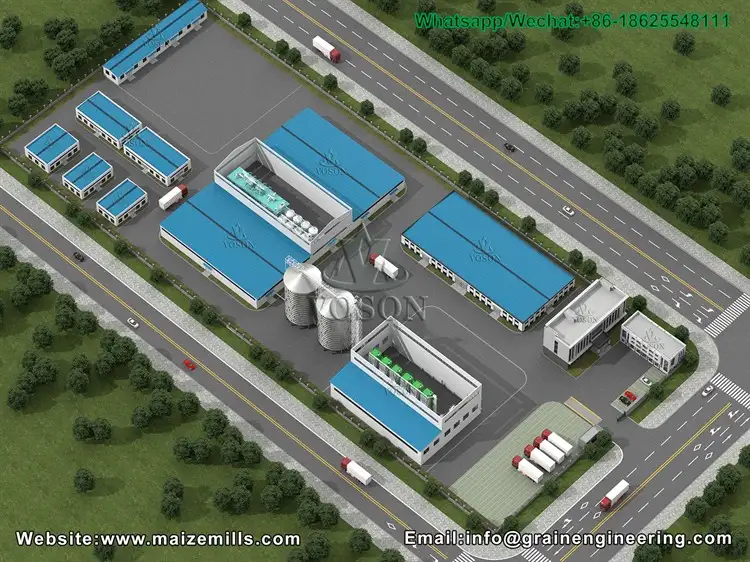
Before confirming a supplier, provide workshop dimensions if possible. A serious supplier should consider the building height, column position, machine access, packing area, storage route and future expansion space.
| Layout or Installation Point | Why It Matters |
|---|---|
| Workshop height | Some equipment and elevators need enough vertical space. |
| Material flow | Raw grain, flour and by-products should move smoothly between sections. |
| Packing area | Finished products need space for weighing, sewing, stacking and loading. |
| Maintenance access | Operators need space to inspect and repair machines. |
| Electrical layout | Control cabinets and wiring should be planned before installation. |
Installation support should also be discussed before shipment. Ask whether the supplier provides installation drawings, online guidance, on-site engineer service, commissioning support and operator training.
Ask for Real Project Evidence
Good sales communication is helpful, but turnkey projects need evidence. Before choosing a supplier, ask for proof that they have handled similar projects or understand complete plant delivery.
- Photos or videos of installed flour milling plants
- Factory testing or equipment production videos
- Plant layout or process flow examples
- Packing and container loading photos
- Installation site photos from previous projects
- Technical documents or operation manual samples
The purpose is not to collect perfect marketing materials. The purpose is to see whether the supplier has real project habits: labeling parts, preparing drawings, packing equipment properly and supporting installation after delivery.
Do Not Ignore Spare Parts and After-Sales Service
A flour milling plant is a long-term operation. Even a well-designed plant needs spare parts, maintenance and technical support. For overseas buyers, this should be discussed before ordering, not after the plant stops running.
Ask the supplier what spare parts will be shipped with the equipment and how future parts will be supplied. A good supplier should be able to provide a wearing parts list and basic maintenance guidance.
- First shipment spare parts list
- Recommended one-year wearing parts package
- Spare parts price and delivery time
- Maintenance manual or operation guide
- Remote support after installation
- Operator training during commissioning
If the supplier avoids talking about after-sales service, the project may become difficult once production begins.
When a Cheaper Supplier Becomes More Expensive
A lower quotation is not always wrong. But buyers should understand why the price is lower. Sometimes the difference comes from a simpler configuration, fewer spare parts, no installation support or missing electrical scope.
| Low Price Reason | Possible Risk |
|---|---|
| Only main machines are included | Buyer must purchase conveyors, pipes or platforms later. |
| No clear electrical scope | Local wiring and control work become uncertain. |
| No installation support | Installation takes longer and mistakes are harder to solve. |
| No spare parts package | Downtime may happen after production starts. |
| No layout design | Equipment may not fit the workshop smoothly. |
The best supplier is not necessarily the most expensive one. It is the supplier that makes the project scope clear and reduces the risk of hidden cost.
Questions to Ask Before Choosing a Supplier
Before making the final decision, buyers can send the same questions to each supplier. The quality of the answers often shows the supplier's real ability.
- Can you provide a process flow chart for my raw material and final product?
- What is included and excluded in your quotation?
- Can you provide a plant layout based on my workshop size?
- How will installation and commissioning be supported?
- What spare parts are included in the first shipment?
- Can you show similar project photos or videos?
- What documents will be shipped with the equipment?
- Who will support us if problems appear after installation?
A reliable supplier may not answer everything instantly, but they should be willing to explain technical details clearly and consistently.
Conclusion
Comparing flour milling plant suppliers for turnkey projects should not start and end with machine price. Buyers should compare project ability, process design, equipment scope, layout support, installation guidance, spare parts and after-sales service.
A complete flour milling plant is a production system. If one section is missing or poorly planned, the final plant may face unstable production, low flour yield, installation delay or higher hidden cost.
Voson provides turnkey flour milling plant solutions for maize, wheat and multi-grain processing projects. You can view our flour milling equipment, flour mill plant projects, maize flour mill plant and wheat flour mill plant for project reference. You can also contact Voson to compare a specific project scope.
FAQ
How should I compare flour milling plant suppliers?
Compare suppliers by process design, equipment scope, layout ability, installation support, spare parts and after-sales service. Do not compare price before checking what is included.
Why do turnkey flour mill quotations differ so much?
Quotations differ because suppliers may include different machines, supporting parts, electrical control, spare parts, installation service and documents.
Is the lowest quotation a good choice?
Not always. A low quotation may be reasonable, but buyers should check whether conveyors, pipes, platforms, electrical control, installation support and spare parts are included.
What documents should I ask for before ordering?
Ask for a process flow chart, equipment list, plant layout, installation drawings, electrical drawings, operation manual, maintenance guide and packing list.