Stainless Steel Bucket Elevator for Maize Processing
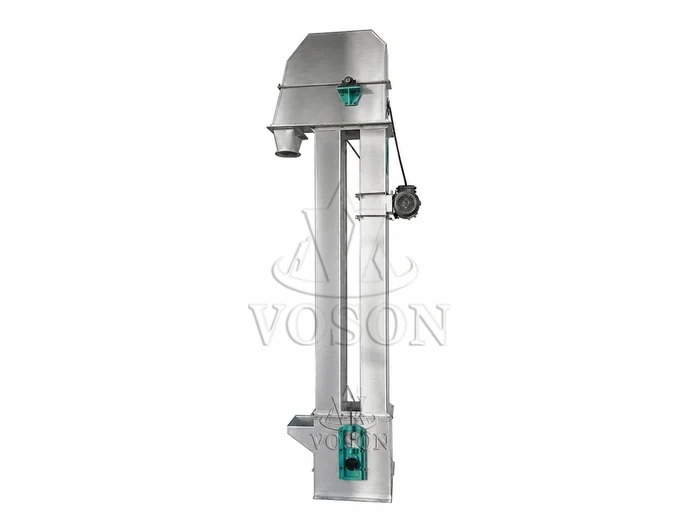
The Voson Stainless Steel Bucket Elevator provides enclosed vertical conveying of maize, corn, corn grits, grain products and other suitable bulk materials in maize milling and grain processing plants. Buckets fixed to a continuous belt or chain carry material from the lower boot section to the head section, where it is discharged into a bin, processing machine or the next conveying system.
Its straight vertical conveying route saves floor space and is useful when material must be lifted between production levels. The enclosed casing helps control dust, reduce product loss and protect the conveying path from the surrounding production environment.
Item
Available Configuration
Typical materials
Maize, corn, corn grits, wheat, rice and suitable grain products
Conveying capacity
Customized; confirmed from material data and plant requirements
Conveying direction
Straight vertical lifting
Conveying element
Buckets fixed to a belt or chain, selected for the application
Product-contact construction
Stainless steel; grade and construction scope confirmed before manufacture
Discharge height
Customized according to the plant layout
Plant integration
Cleaning, degermination, milling, storage and packing sections
No single capacity, lifting height or motor-power value applies to every bucket elevator. Final selection depends on material bulk density, particle size, moisture, flowability, required throughput, lifting height, bucket size, bucket spacing, belt or chain speed and feeding condition.
How a Vertical Bucket Elevator Works
Material enters the boot section through the inlet. As the belt or chain moves, each bucket receives material and carries it upward inside the enclosed casing. At the head section, the buckets pass around the upper pulley or sprocket and discharge material through the outlet.
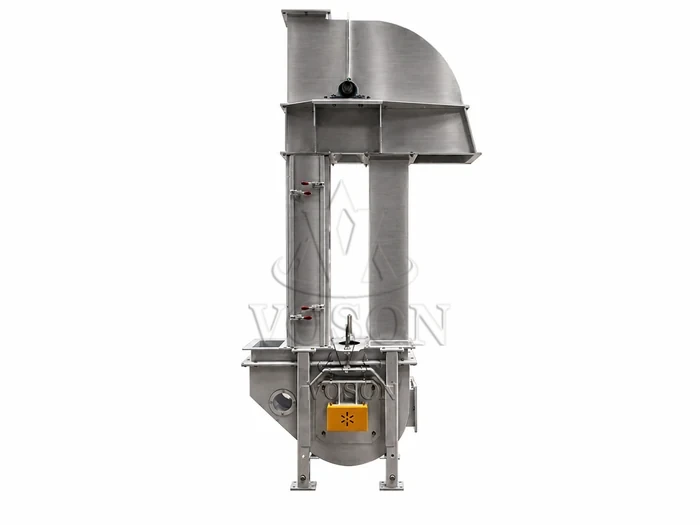
The head section contains the drive assembly and discharge transition. The vertical casing protects the moving components and material stream. The boot section contains the lower pulley or sprocket, inlet and tensioning arrangement. Inspection openings can be added at practical positions for checking the buckets, belt or chain and internal condition.
A stable and controlled inlet flow is important. Excessive feeding can fill the boot, increase resistance and cause material buildup. Insufficient feeding reduces effective capacity. The elevator should therefore be matched with the upstream conveyor, bin outlet or feeding device and interlocked with downstream equipment.
Main Components and Available Options
1. Head Section
The head section includes the drive, upper pulley or sprocket, discharge outlet and inspection access. The outlet transition can be customized to connect with a bin, distributor or conveying machine.
2. Vertical Casing
The casing forms the enclosed lifting channel. Section length, connection method, inspection doors and supporting points are selected according to the lifting height and installation conditions.
3. Buckets and Belt or Chain
Bucket shape, size, spacing and material influence capacity, residue and discharge performance. The belt or chain is selected according to the conveyed material, operating load and required duty.
4. Boot and Tensioning Section
The boot receives material and guides the buckets around the lower pulley or sprocket. A suitable tensioning arrangement helps maintain stable belt or chain operation. Cleanout and inspection access can be included according to the material and maintenance procedure.
5. Monitoring and Control
Optional speed monitoring, belt-misalignment detection, blockage monitoring, level sensors and electrical interlocks can help protect the elevator and coordinate it with the production line.
Main Features
Compact vertical conveying: The straight lifting route saves floor space in multi-level processing plants.
Enclosed material path: The casing helps control dust and limits material loss during lifting.
Stainless steel contact surfaces: Product-contact casing and bucket components can be stainless steel according to the specified construction scope.
Customized lifting height: Casing sections and discharge elevation can match the equipment layout.
Matched connections: Inlet and outlet dimensions can be adapted to upstream and downstream equipment.
Maintenance access: Inspection doors, cleanout openings and removable covers can be arranged where required.
Production-line integration: Sensors and interlocks can coordinate starting, stopping and fault protection.
The required stainless steel grade, surface finish and construction scope must be confirmed before production. Stainless steel product-contact parts do not automatically mean that the drive, support structure and every external component are also stainless steel.
Applications in Maize and Grain Processing
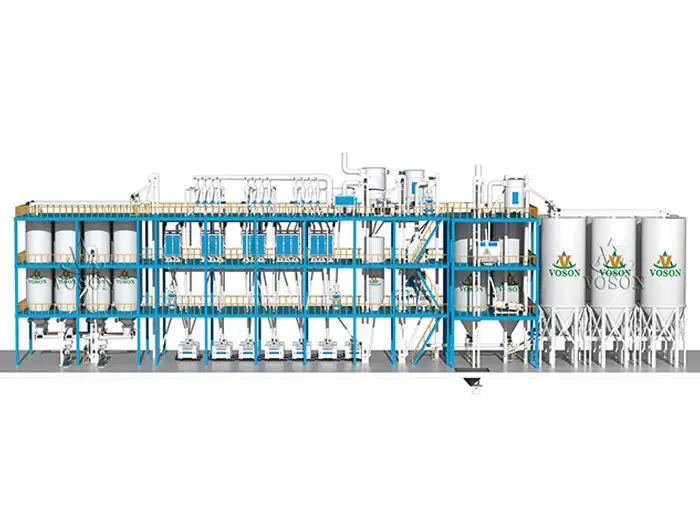
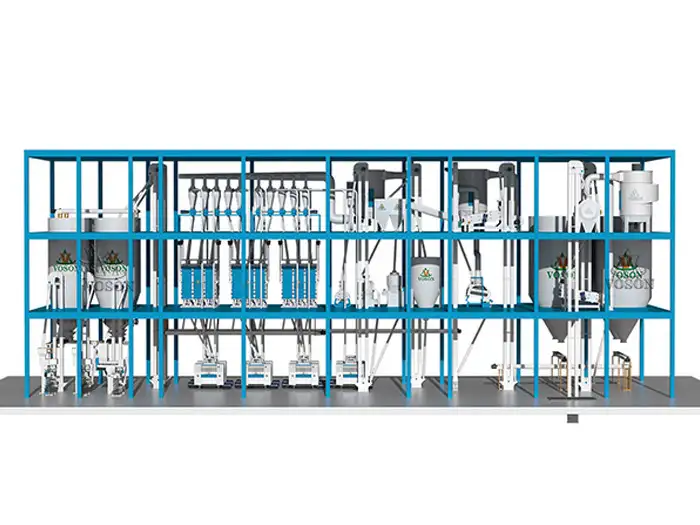
In a maize milling plant, the bucket elevator can lift raw maize from a receiving or cleaning section, transfer conditioned grain to a higher processing level, move corn grits to grading or storage equipment, and feed bulk products into bins above the packing section.
Typical installation positions include:
From a receiving conveyor to a raw-grain storage bin.
Between grain cleaning and conditioning equipment.
Fine flour, sticky material, wet grain, fragile products or highly abrasive materials require a separate assessment. Bucket design, operating speed, inlet method, discharge arrangement and cleaning access must suit the actual material.
Vertical Bucket Elevator or Z-Type Bucket Elevator?
A straight vertical bucket elevator and a Z-type bucket elevator both lift bulk materials, but their layouts and preferred applications are different.
Selection Point
Straight Vertical Bucket Elevator
Z-Type Bucket Elevator
Conveying route
Straight vertical
Horizontal, vertical and horizontal sections
Footprint
Compact
Requires space for lower and upper horizontal sections
Typical duty
Continuous vertical lifting between plant levels
Gentle transfer around equipment or into several positions
Feeding and discharge
Normally one lower inlet and one upper outlet
Can be configured with flexible feed and discharge positions
Material handling
Grain and suitable bulk products
Often selected for fragile granules or layout-sensitive transfer
Main selection factors
Capacity, lifting height, bucket and belt or chain design
Route, bucket speed, product protection and discharge arrangement
The straight vertical design is usually preferred when the main requirement is efficient lifting with a small footprint. A Z-type design is more appropriate when the conveying route needs horizontal sections or gentler handling. Material testing and layout review should determine the final choice.
Reference Selection Parameters
Because confirmed model, capacity and motor-power data are not available for this product, the following table is a reference selection guide rather than a fixed specification sheet.
Parameter
Reference Selection Basis
Model
Customized according to the material and project layout
Capacity
Calculated from required throughput, bulk density and filling condition
Motor power
Selected from lifting height, material load, belt or chain resistance and duty
Lifting height
Confirmed from inlet level, discharge level and connection dimensions
Bucket specification
Selected from particle size, density, flowability and required capacity
Belt or chain
Selected according to material, load and operating requirements
Inlet and outlet
Dimensions and direction customized to connected equipment
Control options
Sensors, alarms, variable-frequency control and electrical interlocks
All project values remain subject to confirmation after the material information and layout drawing have been reviewed. Voson selects the buckets, belt or chain, pulleys or sprockets, casing, tensioning system, gearbox and motor for the actual operating conditions.
Selection and Customization
To configure a suitable stainless steel bucket elevator, provide:
Material name and whether it is whole grain, grits, powder or a mixed product.
Bulk density, particle size, moisture and flowability, if available.
Required conveying capacity and daily operating time.
Vertical lifting height and required discharge elevation.
Upstream feeding method and downstream equipment capacity.
Inlet and outlet direction and connection dimensions.
Available installation space and supporting conditions.
Cleaning frequency and product-change requirements.
Required stainless steel grade, construction scope and local power supply.
Voson can use this information to prepare the elevator layout and select the bucket, belt or chain, casing, drive power, inlet, outlet, inspection access and support arrangement. The equipment can be integrated into a new maize milling line or used to upgrade an existing vertical conveying section.
Frequently Asked Questions
1. What materials can a stainless steel bucket elevator handle?
It can be configured for maize, corn, corn grits, wheat, rice and other suitable grain products. Fine powders, sticky materials and fragile products require additional evaluation.
2. Is this elevator suitable for maize flour?
It may be possible, but fine flour requires careful evaluation of bucket filling, discharge, dust sealing, residue and cleaning. A screw or pneumatic conveyor may be more suitable for some flour-handling positions.
3. What lifting height is available?
The lifting height is customized according to the plant layout. The inlet level, discharge elevation, casing supports and maintenance access must be confirmed before manufacture.
4. Is the complete elevator made from stainless steel?
The stainless steel scope is project-specific. Product-contact casing and buckets can be stainless steel, while the drive and support components can be specified separately. Confirm the grade and scope in the quotation.
5. How are capacity and motor power selected?
They are selected from the required throughput, material bulk density, lifting height, bucket size and spacing, belt or chain speed, feeding condition and operating duty. Fixed figures should not be used without these details.
6. What information is required for a quotation?
Provide the material, capacity, lifting height, inlet and outlet direction, plant layout, stainless steel requirements and local power supply. A drawing or site dimensions will help Voson confirm the configuration.
Contact Voson with your material information, required capacity and lifting height to receive a suitable stainless steel bucket elevator configuration and quotation.
We receive enquiries in English, Español (Spanish), Русский язык (Russian), Français (French) and العربية (Arabic). Our professional team will reply to you within one day. Please feel free to contact us!