Stainless Steel Belt Conveyor for Maize Processing
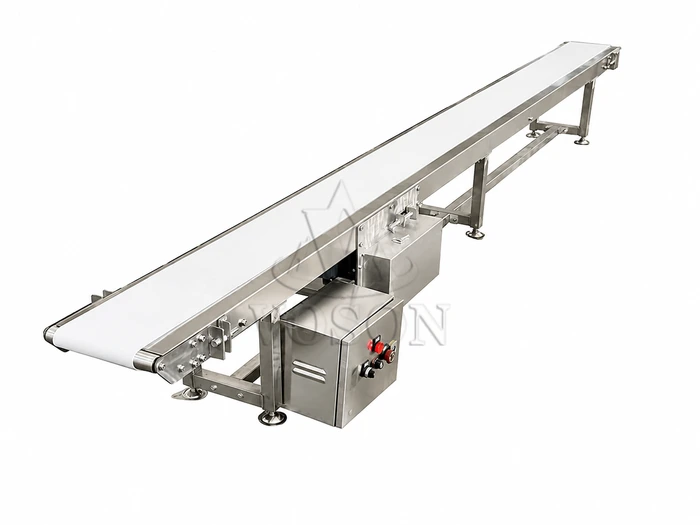
The Voson Stainless Steel Belt Conveyor provides gentle horizontal or inclined transfer in maize and grain processing plants. It is best suited to maize kernels, corn grits, maize germ, assessed granular by-products and finished packages that benefit from a smooth, visible conveying surface. The machine can connect cleaning, degermination, grading, storage and packing stages in a new line or an existing plant upgrade.
A belt conveyor supports the material on a continuous surface instead of moving it with a screw or scraper. This makes it useful where product breakage, easy inspection or smooth transfer between machines is more important than a fully enclosed conveying path. The conveyor length, width, height, incline, belt type, side guides and drive arrangement are configured around the plant layout.
Item
Available Configuration
Typical duties
Transfer of maize kernels, corn grits, maize germ, selected by-products, bags and cartons
Conveying route
Horizontal or inclined
Frame
Stainless steel; grade and construction scope confirmed for the project
Belt options
Smooth, cleated, sidewall or other application-selected belt
Belt width and length
Customized according to product size, loading and available space
Drive control
Fixed speed or variable-frequency control
Optional equipment
Feed hopper, side guides, cover, supports, collection tray, guards and sensors
There is no single capacity or motor-power value that applies to every installation. The final selection depends on the material or package, required throughput, conveying distance, lifting height, belt speed, loading pattern and operating time.
Where It Fits in a Maize Milling Plant
The stainless steel belt conveyor is most valuable at transfer points where the operator needs a clean, open and easily observed route. It can receive material from one machine and deliver it steadily to the next without the agitation created by a rotating screw.
Typical positions include:
Moving cleaned maize from an inspection or sorting station to the next processing stage.
An open belt conveyor is not automatically the best choice for loose maize flour. Fine powder can become airborne or escape at the loading and discharge points. For dusty flour transfer, a cover, skirt sealing and dust extraction may be required, or an enclosed conveyor may be more appropriate.
Main Features
Gentle conveying surface: The product travels with the belt, which can help limit impact and breakage of corn grits, kernels and fragile granular products.
Visible process route: Operators can observe material flow and identify accumulation, contamination or uneven feeding more easily than inside a closed casing.
Stainless steel frame: Stainless steel construction supports cleaner processing areas and corrosion resistance; the exact grade and product-contact scope are confirmed before manufacture.
Horizontal or inclined layout: Frame elevation, supports and belt configuration can connect machines installed at different heights.
Application-matched belt: Smooth, cleated or sidewall belts can be selected according to product stability, incline and cleaning requirements.
Controlled feeding: Variable-speed operation can help coordinate the conveyor with graders, weighing equipment and packing machines.
Customized interfaces: Hoppers, transitions, guides and discharge chutes can be arranged to reduce uncontrolled spreading or spillage.
Maintenance access: Guards, return sections, collection trays and tensioning points can be designed for practical inspection and servicing.
Horizontal, Inclined and Cleated Designs
Horizontal Belt Conveyor
A horizontal conveyor connects machines at similar elevations. In maize processing, it can provide an inspection section for kernels or grits, transfer material to a buffer bin, or carry packaged products away from a packing station. Guide rails or side skirts are selected according to the product width and loading condition.
Inclined Belt Conveyor
An inclined conveyor raises material from a low discharge to a grader, storage hopper or packing-system inlet. The workable angle is not determined by height alone. Product shape, surface friction, feed rate and the tendency to roll or slide must also be evaluated.
Cleated or Sidewall Belt Conveyor
Cleats help retain kernels, grits or packages when the route rises. Sidewalls can reduce edge spillage for loose material. Cleat height, spacing and sidewall profile are chosen together with the belt speed and feed depth; an overly deep load can still spill or track poorly.
How the Conveyor Operates
The endless belt travels around a drive pulley and a tail pulley. Rollers or a sliding bed support the loaded side, while the motor and gearbox rotate the drive pulley. Material enters through a controlled feed point, moves at belt speed and leaves through the discharge transition.
Stable operation depends on centred loading, correct tension and accurate alignment. If maize or corn grits fall onto one edge, the load can encourage mistracking and spillage. The feed chute should therefore distribute material within the usable belt width, and the upstream flow should remain within the conveyor's designed load.
For a connected production line, sensors and electrical interlocks can coordinate the conveyor with upstream and downstream equipment. A stopped receiving machine should signal the feeding equipment before material accumulates at the transfer point.
Stainless Steel and Belt Selection
The term “stainless steel belt conveyor” normally describes the frame or the agreed product-area structure. It does not mean that the belt, motor, gearbox, bearings and every fastener are made from stainless steel. Voson confirms the material scope in the technical offer so the supplied construction matches the intended environment.
Likewise, a white belt is not proof of food-contact compliance. If the belt will touch maize, corn grits or another food product, its compound and supporting documents must meet the customer's specified market and plant requirements. The quotation should also state the required stainless steel grade, surface finish, cleaning chemicals, operating temperature and exposure to oil or abrasive particles.
Where frequent cleaning is required, the conveyor can be evaluated with accessible belt edges, removable trays, simple side guides or other features that reduce hidden residue. The final arrangement depends on how the plant cleans between products and how much access is available around the machine.
Belt Conveyor or Enclosed Conveyor?
Choosing the conveying method by product name alone can create avoidable dust, residue or breakage problems. The route and material behavior are equally important.
Process Need
Conveyor to Evaluate
Gentle, visible transfer of kernels, corn grits or packages
Choose a stainless steel belt conveyor when the process needs visible flow, gentle handling, manual inspection or package transport. Evaluate an enclosed conveyor when fine dust containment, a sealed route or several changes in direction are the main priorities. Voson can compare the available methods within the complete maize-processing flow before the layout is finalized.
Reference Selection Parameters
Confirmed standard model, capacity and motor-power data are not available for this product. The following table is a selection guide, not a guaranteed specification sheet.
Parameter
Reference Selection Basis
Model
Customized and confirmed in the quotation
Required capacity
Hourly throughput, bulk density, loading depth and operating factor
Belt width
Product or package dimensions, distribution across the belt and required capacity
Conveyor length
Distance between the feeding and receiving equipment
Incline and lifting height
Product stability, friction, cleat design and available floor space
Belt speed
Capacity, transfer-point control and inspection requirements
Motor power
Loaded resistance, length, incline, belt speed and operating duty
Belt specification
Product contact, temperature, oil exposure, abrasion and cleaning method
Frame and supports
Equipment elevations, access clearance and site conditions
Electrical options
Speed control, emergency stops, guards, sensors and interlocks
Final dimensions, belt specification and drive power are confirmed only after the actual product data and layout have been reviewed. Any value supplied during preliminary discussion remains a reference until the project configuration is approved.
Frequently Asked Questions About Stainless Steel Belt Conveyors
1. Can it convey both maize and finished bags?
Yes, but the same configuration may not be ideal for both duties. Loose kernels or grits need suitable side containment and a controlled feed point, while bags require a belt width, support and discharge arrangement matched to package size and weight.
2. Can it transport maize flour?
It can be assessed, but an open belt allows fine dust to escape more easily than an enclosed conveyor. Covers, skirts and extraction may be needed. For some flour-transfer positions, an enclosed screw or tubular chain conveyor is the better solution.
3. Is the conveyor food-grade?
Food-contact suitability depends on the specified belt compound, documentation, stainless steel grade and product-contact construction. The white belt and stainless appearance alone do not establish certification.
4. Can it work on an incline?
Yes. The permissible angle and usable capacity depend on material friction, particle shape, belt surface, cleats, sidewalls and feed stability. These factors must be checked together.
5. Is the whole machine stainless steel?
The construction scope is customized. Product-area parts and the frame can be stainless steel, while the motor, gearbox, bearings and selected accessories may use other suitable materials. The quotation defines the exact scope.
6. How does Voson select the conveyor?
Voson reviews the material or package, target capacity, route length, inlet and outlet heights, incline, cleaning method, local power supply and connected machines. A layout drawing or clear site dimensions helps confirm the belt width, support arrangement, drive and transfer interfaces.
Send Voson your maize product information and equipment layout to receive a stainless steel belt conveyor configuration for a new maize milling line or an existing plant upgrade.
We receive enquiries in English, Español (Spanish), Русский язык (Russian), Français (French) and العربية (Arabic). Our professional team will reply to you within one day. Please feel free to contact us!